Key takeaways
- Standard proof of delivery apps are useless in the network blackspots common on Indian highways and in remote warehouses.
- A true offline proof of delivery app for poor network conditions must store all data locally on the driver's device first.
- This offline-first approach automatically syncs photos, signatures, and geotags once a stable connection is found, cutting payment delays.
- Key features like smart sync logic prevent battery drain while ensuring data is never lost, even if a phone is offline for days.
- MoboSafe's ePOD solution is built for Indian realities, ensuring you get proof of delivery no matter the network.
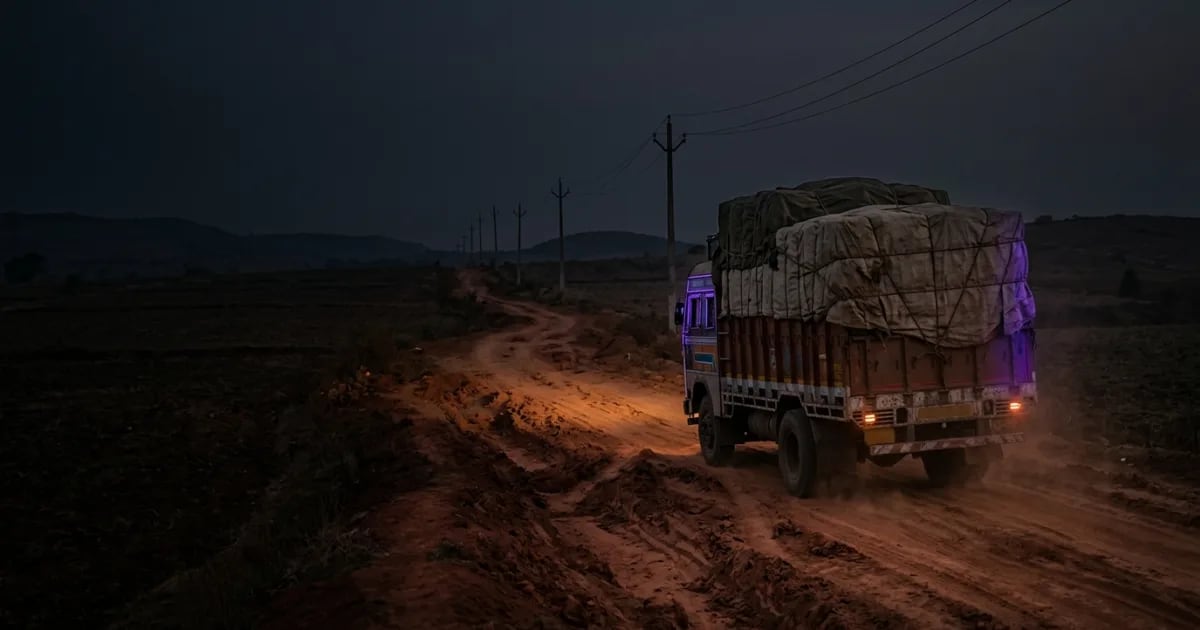
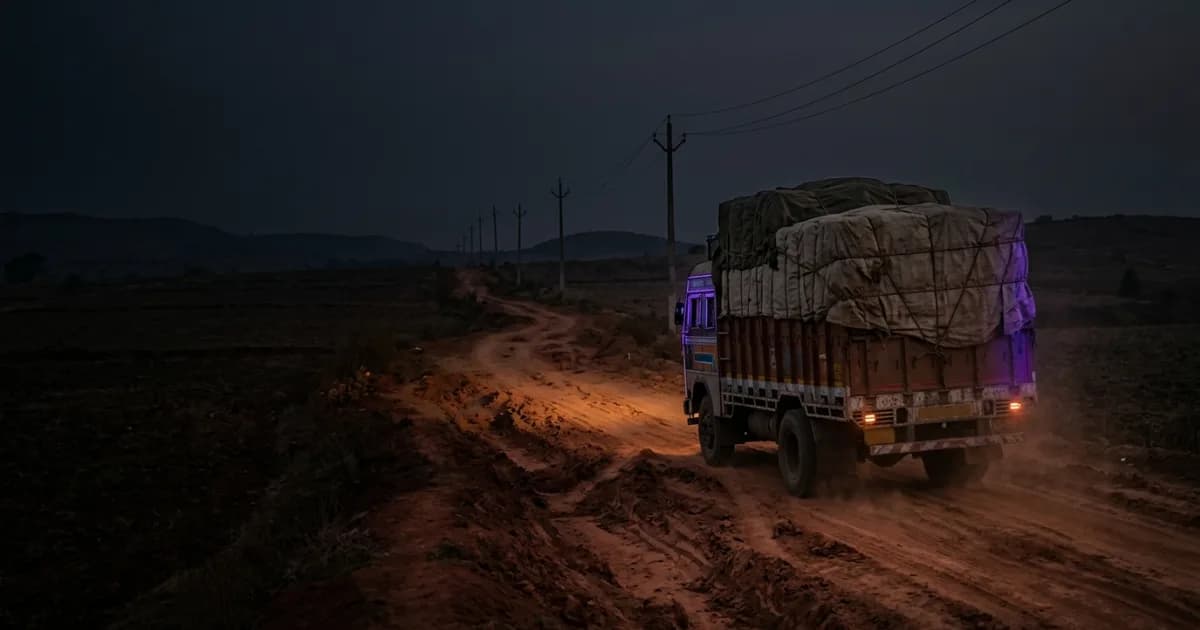
We see it every day. A truck reaches a warehouse deep inside a Bhiwandi industrial area. The signal is dead. The driver completes the delivery, but the fancy 'real-time' app is just a spinning wheel. The manager in Mumbai starts calling. The customer's accounts team won't process the invoice without the POD. Your payment is now stuck for days, maybe weeks. All because your software was designed in a high-tech office, not for the dusty reality of Indian logistics.
An offline proof of delivery app for poor network areas solves this by storing all data directly on the driver's smartphone. It captures geotagged photos, digital signatures, and timestamps without needing an internet connection. This data is queued securely on the device. Once the driver moves into an area with a 3G or 4G signal, such as a highway dhaba or the next town, the app automatically syncs all the cached PODs to the central server. For instance, this immediately makes the POD available in your dashboard, allowing you to generate an invoice the same day. This methodology cuts the order-to-cash cycle from an average of 15-20 days down to just 2-3 days, freeing up critical working capital and eliminating endless follow-up calls. It makes your operation resilient to the patchy connectivity that defines most Indian transit routes.
The Great Network Myth on Indian Highways
There's a fantasy sold by software companies that India is fully connected. It is not. Ask any driver on the Delhi to Mumbai route. There are huge stretches with zero signal. The same goes for rural delivery points, factory basements, and remote godowns. Relying on a constant connection is a recipe for failure.
Real-Time Data is the continuous flow of information from a device to a central server. When that flow is broken, your entire operation grinds to a halt. Your app becomes a useless brick, your driver is frustrated, and your cash is locked up.
What is an Offline Proof of Delivery App for Poor Network, Really?
It's not just an app that 'tries again' when the network fails. A genuine offline-first app is built differently from the ground up. It assumes there is no network. Its primary function is to capture and secure data locally. The syncing is secondary.
Data Caching is the core technology here. It's the process of storing information temporarily on the local device, like the driver's phone. Here’s how it works in practice:
- The driver captures the POD: photo of the goods, recipient's signature, and any notes.
- The app saves this data to the phone's internal memory, along with a GPS location stamp and a precise timestamp.
- The app waits quietly in the background for a stable internet connection.
- Once a signal is detected, it uploads the cached data automatically.
For example, a driver delivers to a remote village in Rajasthan. He collects three PODs while completely offline. Two hours later, he stops for chai on the main highway. The moment his phone connects to the network, all three PODs are uploaded to the manager's dashboard without him even opening the app. Our Electronic Proof of Delivery system was designed precisely for these scenarios.
Features That Actually Work in the Field
When you are looking for an offline proof of delivery app, ignore the marketing noise. Focus on what matters on the ground. This is as important as finding the best fleet management software for your business.
- Offline Geotagging: The app must be able to use the phone's internal GPS to stamp the exact location of the delivery, even with mobile data turned off. Geotagging is the addition of geographical data to media like photos. This is non-negotiable for fighting false claims of non-delivery.
- Smart Sync: A good app doesn't constantly search for a signal, draining the battery. It uses smart logic to check periodically or sync only when a strong, stable connection is available.
- Robust Local Storage: The app must handle storing dozens, even hundreds, of high-resolution photos and signatures without crashing or slowing down the phone.
- Background Operation: The syncing process should happen in the background, so the driver doesn't have to manage it manually.
The Hidden Costs of a Bad Connection
A failed POD upload is not a small problem. It triggers a cascade of costly issues that hit your bottom line directly. We know from Ministry of Road Transport and Highways mandates that paperwork is everything. A missing digital paper is just as bad as a missing physical one.
| Problem | Direct Cost | Hidden Cost |
|---|---|---|
| Delayed POD Upload | Delayed invoicing. | Working capital crunch. |
| Disputed Delivery | Lost goods value. | Loss of customer trust. |
| Expired eWay Bill | Heavy challans. | Vehicle impound risk. |
| Driver Frustration | High driver turnover. | Operational disruption. |
For instance, if your eWay bill validity is about to expire, you need that POD to prove the trip ended on time. According to the official eWay Bill portal rules, failure to do so can result in massive penalties. Waiting for a network connection is a huge financial risk.
How MoboSafe Delivers Where Others Fail
We built our platform in India, for India. We didn't take a foreign product and slap a new logo on it. Our entire system is designed around the reality of poor networks and tough operating conditions.
Our methodology is simple: we build for the worst-case scenario. We analyzed data from thousands of routes to map network dead zones and designed our AI Dashcams and software to function seamlessly through them.
Here’s our advantage:
- Hardware-Agnostic AI Control Tower: You don't need to throw away your existing GPS devices or buy special phones. Our software works with what you already have, creating a single unified view of your fleet.
- AI Voice Calling Agents: This is a world-first. If a POD hasn't synced because of a network issue, our AI can call the driver based on geofence triggers. For example: "We see you have left the ABC warehouse geofence. Was the delivery successful? Press 1 for yes, 2 for no." You get confirmation without needing data.
- Guaranteed Data Sovereignty: Our platform is built and hosted in India. Your critical operational data never leaves the country, ensuring compliance and security. Data Sovereignty is the concept that information is subject to the laws and governance structures within the nation it is collected.
Frequently Asked Questions (FAQ)
What happens if the driver's phone battery dies before the POD syncs?
A well-designed offline app saves the data to the phone's persistent storage the moment it's captured. As long as the data was saved before the phone died, it will be safe and will sync automatically once the phone is recharged and finds a network.
How much storage space does an offline POD app use?
This depends on the number of photos and their resolution. However, a good app compresses images efficiently. Typically, a full day's worth of PODs (e.g., 20-30 deliveries) would take up less than 100-200 MB, which is easily manageable on modern smartphones.
Can offline PODs be integrated with accounting software?
Absolutely. Once the POD data syncs to the central server, it can be pushed to other systems like SAP, Tally, or your custom ERP through an API. API Integration is the software bridge that allows different applications to share data automatically.
Is an offline proof of delivery app secure?
Yes. Data stored locally on the device should be encrypted. When it syncs to the server, it should use secure transfer protocols (like HTTPS) to protect it from being intercepted. The security is as strong as the app's design.
Stop fighting reality. Your network will fail. Your drivers will be in dead zones. The question is whether your tools are smart enough to handle it. Choose a system built for the real world, not a perfect one. Learn more about us or contact our team to see how an offline-first approach can transform your operations. Reviewed by the MoboSafe editorial team.
Related MoboSafe workflows
Review the documented product scope and setup requirements for these related operational tasks.
Trip Management
Plan, monitor, and analyse fleet trips with vehicles, drivers, waypoints, documents, exception handling, and delivery records.
Loading & Dispatch
Create loading sheets with vehicle and driver assignments, consignment items, weight checks, documents, and dispatch printouts.
Transport Accounting
Transport accounting software with purchase orders, supplier ledgers, invoices, receipts, payments, journal entries, and financial reports.
Tags
Written by
MoboSafe Expert Team
Logistics Technology Specialist
Contributing writer at MoboSafe.