Key takeaways
- Detention charges from loading and unloading delays are a major hidden cost in heavy haulage.
- Real-time vehicle tracking is essential for proving arrival and departure times to clients.
- Integrating trip data with dispatch helps manage loading bay windows and prevent vehicle bunching.
- Digital proof of delivery provides timestamped evidence to prevent payment disputes.
- A unified fleet platform reduces manual coordination and brings all operational data into one place.
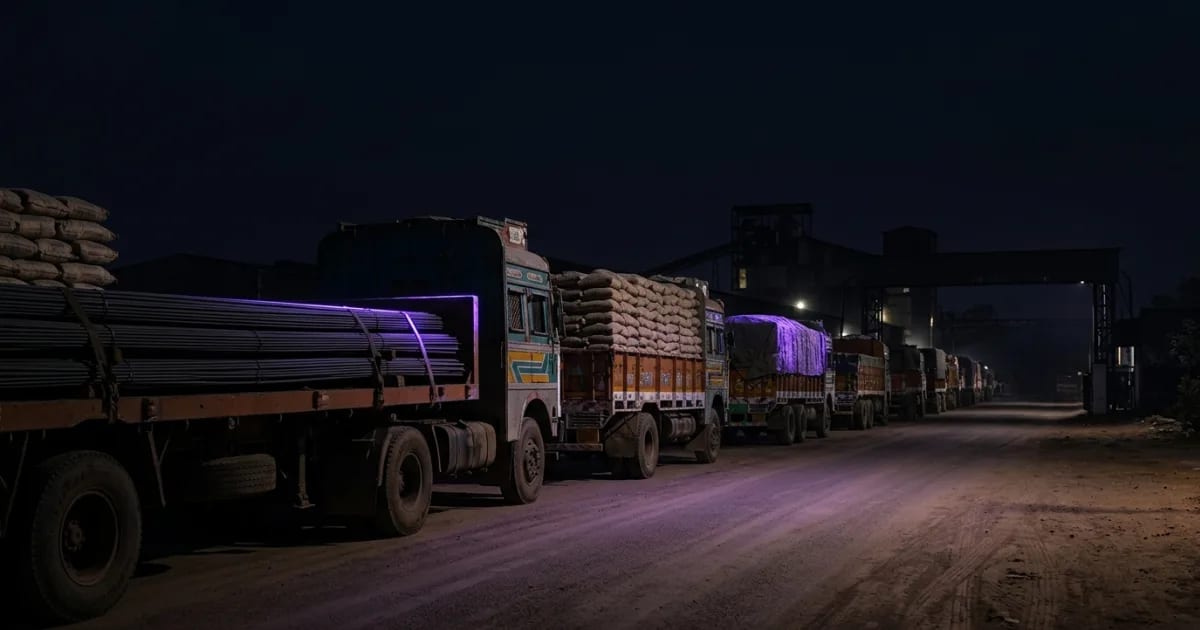
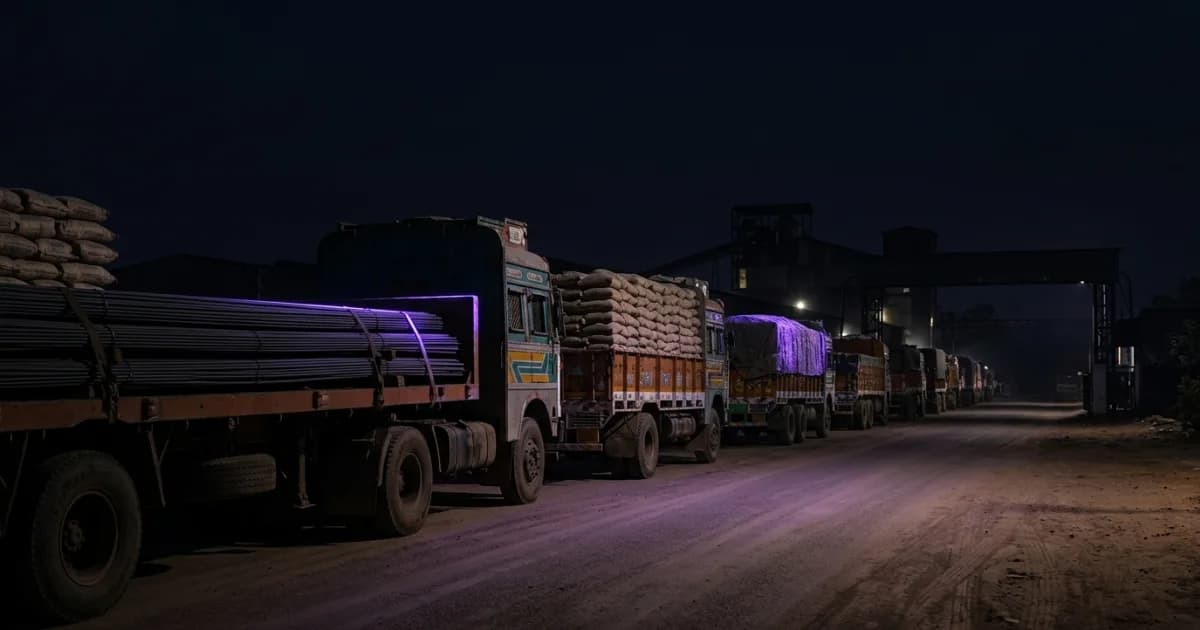
Transporting cement and steel is a tough business. Your trucks carry heavy, high-value loads. Your clients work on strict project deadlines. Every delay at a plant, warehouse, or construction site costs you money. These delays, known as detention, can destroy your profit margins. Simple GPS tracking is not enough. You need a system built for the realities of heavy haulage in India.
Effective fleet management for cement and steel transport directly counters costly detention charges by creating an undisputed digital record of vehicle movements. It uses geofencing to automatically log entry and exit times at loading plants and project sites, eliminating manual errors and arguments. When a truck is held up, the system generates alerts, allowing managers to intervene or collect evidence for billing. This data is critical for e-way bill compliance, as delays can risk expiry. The eWay Bill portal rules state that validity is based on distance and time. An integrated system helps you monitor this and apply for extensions when needed. By linking trip data, location stamps, and digital proof of delivery, you can prove your performance, justify detention fees, and protect your revenue. It transforms your operation from reactive to proactive, turning costly waiting time into billable hours.
Why Standard Tracking Fails for Heavy Haulage
Your business is not like e-commerce delivery. You cannot just drop a package and leave. Operations involve multiple parties. The plant manager, your driver, the site contractor, and the crane operator all have a role. A delay by any one of them causes a chain reaction. Standard tracking shows a dot on a map. It does not explain why that dot has been stationary for three hours. This lack of context is where profits are lost.
For instance, a truck arrives at a construction site on time. The site foreman says the crane is busy with another job. Your truck and driver must wait. Without proof of the arrival time and the reason for the delay, billing for this waiting period is nearly impossible. Detention charges are fees billed to a client for holding a vehicle longer than the agreed time for loading or unloading. They are hard to enforce without solid evidence.
The Core Challenge: Proving Your Timestamps
The entire dispute over detention revolves around time. When did your truck arrive? How long did it wait? When did it finally get unloaded and leave? Your driver's word against a site manager's logbook is a losing battle. You need automated, unbiased data.
This is where technology provides a clear answer. Geofencing is a feature that creates a virtual boundary around a real-world location, such as a steel plant or a project site. When a vehicle with a GPS tracker enters or exits this zone, the system automatically records the event with a timestamp. No manual entry is needed. It is accurate and cannot be disputed.
For fleets with vehicles from various projects, you might have GPS devices from different brands. This creates data silos. An AI control tower for fleet management solves this by unifying data from multiple supported GPS hardware models into a single dashboard. Everyone on your team sees the same information.
Effective Fleet Management for Cement and Steel Transport
A proper system goes beyond just tracking. It manages the entire trip lifecycle. This is how you build an efficient operation that controls costs and improves service. True fleet management for cement and steel transport connects planning, execution, and compliance in one workflow.
Trip Planning and Dispatch
Good planning prevents problems before they happen. A smart dispatch system links a specific truck, driver, and consignment to a trip plan. You can schedule arrivals to avoid having three of your trucks show up at the same gate at once. For example, a dispatcher can see the real-time location of all vehicles and stage their entry into a busy steel yard, reducing idle time for everyone.
Real-Time Monitoring and Alerts
Active monitoring is key. You can set up alerts for specific events.
- Entry/Exit Alerts: Get notified the moment a truck enters a client's site.
- Dwell Time Alerts: If a vehicle waits longer than your agreed free time (e.g., two hours), the system alerts the manager.
- Deviation Alerts: Know immediately if a driver goes off the planned route.
Digital Proof of Delivery (ePOD)
Once unloading is complete, proof is needed. An ePOD solution allows the driver to capture a signature, photos of the delivered goods, and a timestamp on their mobile device. This digital receipt is instantly available to your billing team. It eliminates delays caused by waiting for physical paperwork to return to the office.
Managing Compliance: e-Way Bills and Vehicle Fitness
Heavy haulage is heavily regulated. Keeping your papers in order is as important as delivering the material. Detention can create serious compliance risks, especially with Goods and Services Tax (GST) e-way bills.
An E-Way Bill is a mandatory electronic document for moving goods worth over ₹50,000, as required by the GST portal. Its validity is time-bound based on travel distance. A long delay at a loading point can cause the e-way bill to expire mid-trip, leading to huge penalties. For instance, if a truck is held for 12 hours before starting its journey, it loses half a day of a valid e-way bill. A good system monitors trip progress against e-way bill validity and alerts you to potential expiry.
Vehicle upkeep is also vital. Regular checks ensure safety and prevent breakdowns. Using a system for digital vehicle inspections helps drivers complete pre-trip checklists on their phones, giving you a real-time view of your fleet's health.
Comparing E-Way Bill Management Methods
| Feature | Manual Process | Integrated System |
|---|---|---|
| Expiry Alert | Manual tracking. | Automated alerts. |
| Part-B Update | Requires portal login. | Updates from trip data. |
| Detention Proof | Relies on call logs. | GPS-based evidence. |
Choosing the Right Technology Partner
The right software can transform your business. The wrong one adds more headaches. When choosing a platform for fleet management for cement and steel transport, look for a partner who understands your specific challenges. Your methodology should involve checking for key features that support heavy haulage.
Your partner should offer a platform that can handle the complexity of your operations. This includes integrating with your existing accounting software or ERP. An API (Application Programming Interface) is a set of rules that allows different software applications to communicate with each other. For example, a good API allows your fleet platform to send trip expense data directly to your accounts team, saving hours of manual data entry. Look for solutions reviewed in guides to the best fleet management software in India to see how they stack up.
Our methodology for this article involved reviewing the official compliance rules on the Ministry of Road Transport and Highways website and common operational hurdles for heavy goods transport. A good partner should demonstrate this same level of industry knowledge. Find out more about our approach on our about us page or get in touch to discuss your fleet.
Frequently Asked Questions
What are the main causes of detention in steel transport?
Common causes include lack of coordination at the unloading site, crane or forklift unavailability, incorrect paperwork, and site congestion where multiple trucks arrive at the same time.
How does GPS tracking help reduce detention charges?
GPS tracking with geofencing provides indisputable, timestamped proof of when a vehicle arrived and departed a location. This evidence can be used to accurately bill for detention time and resolve disputes with clients.
Can I use one platform for my entire mixed fleet of trucks and trailers?
Yes, modern fleet management platforms are designed to handle mixed fleets. They can integrate various types of GPS devices and vehicle types into a single dashboard, providing a unified view of all your assets.
What is the role of ePOD in billing for cement transport?
In cement transport, an ePOD (electronic proof of delivery) confirms that the correct quantity and grade of cement were delivered. It captures the client's signature and timestamps, which speeds up the billing cycle by providing immediate proof to the finance team.
How does fleet management software handle e-way bill compliance?
The software links an active e-way bill to a specific trip. It monitors the truck's location and the time elapsed against the e-way bill's validity period. It can send alerts if a bill is nearing expiry, giving you time to request an extension if eligible.
Related MoboSafe workflows
Review the documented product scope and setup requirements for these related operational tasks.
E-Way Bill Management
Manage e-way bills with GST portal connections, generation, trip links, expiry review, and eligible extension requests in MoboSafe.
Loading & Dispatch
Create loading sheets with vehicle and driver assignments, consignment items, weight checks, documents, and dispatch printouts.
Trip Management
Plan, monitor, and analyse fleet trips with vehicles, drivers, waypoints, documents, exception handling, and delivery records.
Fleet APIs & Integrations
Configure MoboSafe integrations, API access, device connections, connection tests, usage monitoring, and dashcam backup settings.
Tags
Written by
MoboSafe Expert Team
Logistics Technology Specialist
Contributing writer at MoboSafe.