Key takeaways
- The Mumbai-Pune highway is a high-risk area for fuel theft due to heavy traffic and numerous unmonitored stops.
- Theft methods include siphoning, short-filling at pumps, and collusion between drivers and fuel station staff.
- Real-time fuel sensors and GPS tracking provide instant alerts for sudden fuel drops and route deviations.
- Digital fuel indents and expense reconciliation create a clear audit trail that discourages malpractice.
- Combining technology with clear driver policies is the most effective way to secure your fuel assets.
Truck fleet fuel theft on the Mumbai Pune highway is a systematic problem that drains profits directly from your balance sheet. The methods are varied and often hard to detect with manual checks alone. Common tactics include siphoning small amounts of fuel at unofficial stops, colluding with fuel pump attendants for short-filling, or manipulating meter readings. A driver might claim a full tank but only receive 90% of the fuel, with the rest sold on the black market. Over a year, a single truck losing 50 litres per week can cost a fleet owner over ₹2 lakh. The solution requires a multi-layered approach. Technology like GPS trackers with fuel sensors provides real-time data on fuel levels, locations, and consumption. This data, when paired with a robust software platform, allows for instant alerts on sudden fuel drops, comparison of fuel filled versus mileage, and tracking of unscheduled stops, creating a strong deterrent and clear evidence for action.
Common Methods of Fuel Theft on This Route
Understanding the problem is the first step. Thieves are creative. They use simple tricks to steal fuel. This costs you money every day. Your biggest operating expense is at risk.
Siphoning at Unofficial Stops
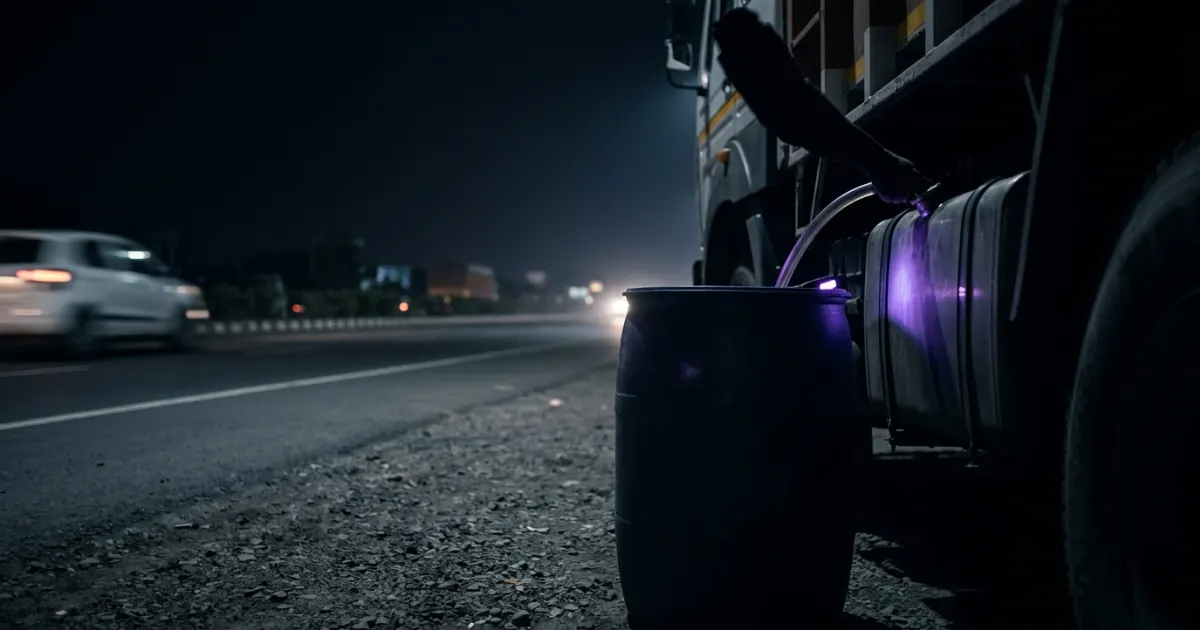
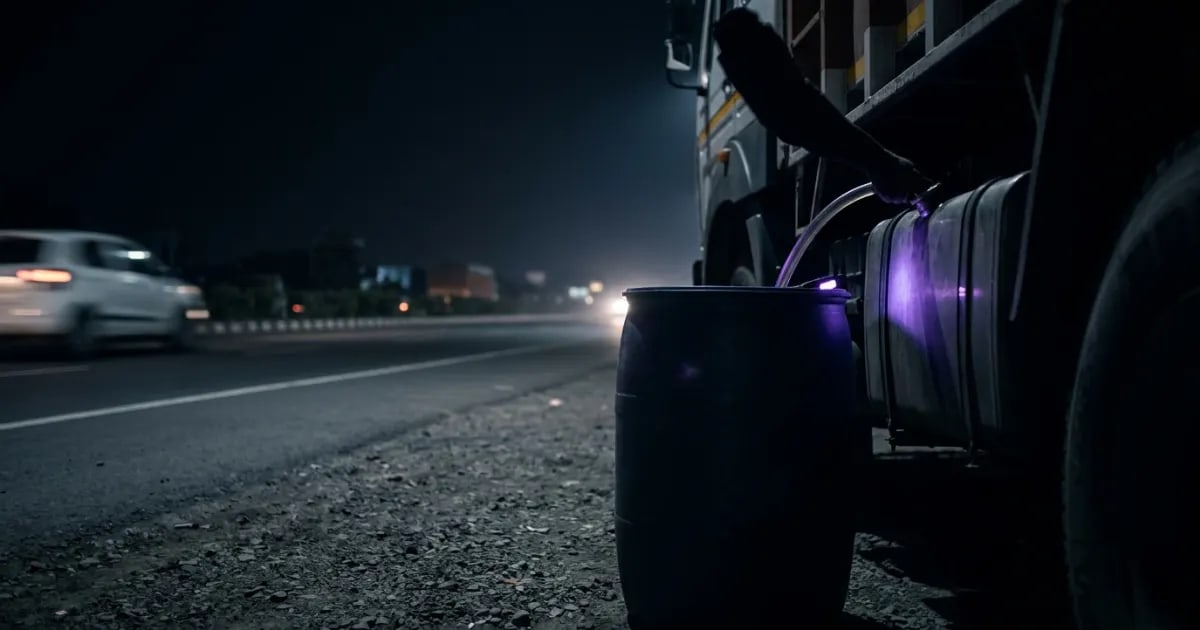
Drivers may stop at dhabas or secluded spots along the highway. Here, accomplices can siphon diesel from the tank using a simple pipe. It happens quickly. Even a few minutes is enough to steal 20-30 litres. These small losses add up to a big amount over many trips. For instance, a planned stop for food can easily hide a quick siphoning operation.
Collusion at Fuel Pumps
This is a very common issue. A driver might have a deal with the fuel pump staff. They fill less fuel than what is shown on the bill. The driver and the staff then split the profit from the extra fuel. For example, the bill shows 200 litres, but the truck only gets 180 litres. The remaining 20 litres are sold illegally.
Mileage and Logbook Fraud
Some drivers may manipulate trip sheets or logbooks. They might inflate the distance travelled to account for missing fuel. Without a way to verify the actual route and distance, it is hard to catch this type of fraud. Logbook fraud is the practice of falsifying records to hide unauthorized activity or theft. This makes manual audits unreliable.
Why This Corridor is a High-Risk Zone
The Mumbai-Pune highway is one of India's busiest routes. This high volume of traffic creates both opportunity and cover for illegal acts. Pressure for quick turnarounds can lead to less oversight from fleet managers.
Drivers face many stops for checks on their vehicle papers. These rules are set by the Ministry of Road Transport and Highways. Each stop is a potential risk point where a truck is idle and vulnerable. Delays can also affect trip documents. For example, an expired e-way bill during a long halt can lead to penalties, as defined on the official eWay Bill portal. These pressures create a chaotic setting where theft can go unseen.
A Proactive Strategy Against Truck Fleet Fuel Theft on Mumbai Pune Highway
You cannot watch every truck all the time. But technology can. A proactive approach uses data to prevent theft before it becomes a habit. It shifts you from reacting to problems to preventing them.
The core of this strategy is a connected system. Fleet management software is a platform that combines data from various sources to give you a single view of your operations. It connects GPS data with fuel data and trip plans. This is where you find the truth.
- Install Reliable Hardware: Use high-quality fuel sensors and GPS devices. These devices must send accurate data in real time. Poor hardware gives bad data, which is useless.
- Use an Integrated Platform: Your software should bring all information together. This includes GPS Tracking, fuel levels, and trip expenses. Seeing everything in one place makes it easy to spot issues.
- Set Up Instant Alerts: Configure alerts for sudden fuel level drops, entry into risky geofenced areas, or long, unscheduled stops. An alert lets you act fast.
The Power of Data in Fuel Audits
Data provides proof. Gut feelings are not enough to manage a fleet. You need numbers to back up your decisions. A good system gives you reports that show you exactly where the leaks are.
With a tool for real-time fuel monitoring, you can run detailed audits. Fuel reconciliation is the process of comparing the amount of fuel purchased with the amount of fuel consumed and what is left in the tank. A proper system automates this. For instance, you can generate a report that compares the fuel filled at a pump against the vehicle's mileage and standard consumption rate. Any large difference is a red flag.
Our methodology for this guide reviewed common fleet challenges and the ways software can solve them. Platforms like MoboSafe are designed to make this data easy to access and use.
Manual vs. Automated Fuel Tracking
| Feature | Manual Tracking (Paper/Excel) | Automated Tracking (Software) |
|---|---|---|
| Data Entry | Driver reports it. | Sensor data is live. |
| Theft Detection | Delayed, if ever. | Instant alerts. |
| Accuracy | Prone to errors. | Highly accurate. |
| Proof | Hard to prove. | Clear data evidence. |
Building a Culture of Honesty
Technology is a tool, not a complete solution. You also need to build a culture of accountability with your drivers. Clear rules and fair treatment are key.
Start by setting clear policies on fuel usage, approved stops, and emergency procedures. Train your drivers on these policies. Explain that the tracking systems are for safety and efficiency, not just to watch them. When drivers understand the 'why', they are more likely to cooperate.
Recognize and reward honest drivers. Good performance, such as consistent fuel efficiency, should be acknowledged. This encourages positive behavior. Ultimately, the best fleet management software supports good management. It does not replace it. Driver performance management is the ongoing process of monitoring, evaluating, and improving driver behavior and efficiency.
Frequently Asked Questions
How much fuel can be stolen from a truck?
The amount varies. Siphoning can remove 30-50 litres in minutes. Collusion at pumps can lead to a 10-15% shortage on every fill. Over a month, this can easily be hundreds of litres per truck.
Can GPS trackers alone prevent fuel theft?
Not entirely. A basic GPS tracker shows location. To detect theft, you need a GPS device integrated with a fuel level sensor. This combination provides location context to sudden fuel drops.
What is a digital fuel indent system?
A digital fuel indent is a paperless request for fuel. A manager approves the indent on a platform like MoboSafe. The driver shows the approved digital code at the pump. This ensures they only take an authorized amount of fuel from an approved station.
How do I prove fuel theft to take action against a driver?
You need clear evidence. Data from a fleet management system provides this. For example, a report showing a sudden 50-litre drop in fuel while the vehicle was stationary in an unauthorized location is strong proof. This is much better than relying on word of mouth.
If you are tired of losing money to fuel theft, it's time to take control. Learn more about us or contact our team to see how a connected platform can protect your assets.
Related MoboSafe workflows
Review the documented product scope and setup requirements for these related operational tasks.
Fuel Indent Management
Manage fleet fuel indents, pump redemption, meter-photo evidence, audits, fuel bills, settlements, and driver reimbursement claims.
Driver Advances & Trip Expenses
Estimate trip costs, approve driver advances, record receipts, and compare planned versus actual fuel, toll, allowance, and other expenses.
Transport Accounting
Transport accounting software with purchase orders, supplier ledgers, invoices, receipts, payments, journal entries, and financial reports.
Fleet Reports & Analytics
Generate and schedule fleet, trip, driver, fuel, inventory, accounting, and HR reports with scoped filters and export options.
Tags
Written by
MoboSafe Expert Team
Logistics Technology Specialist
Contributing writer at MoboSafe.