Key takeaways
- The official penalty for an expired eWay Bill is a fine, but the real cost comes from vehicle detention.
- Detention causes bigger losses from lost revenue, driver costs, client penalties, and damage to your business reputation.
- Manually tracking eWay Bills with spreadsheets and phone calls is unreliable and often leads to costly human error.
- Automation software prevents expiry with proactive alerts and simple extension options, saving you money and keeping trucks moving.

What is the Official Penalty for an Expired eWay Bill?
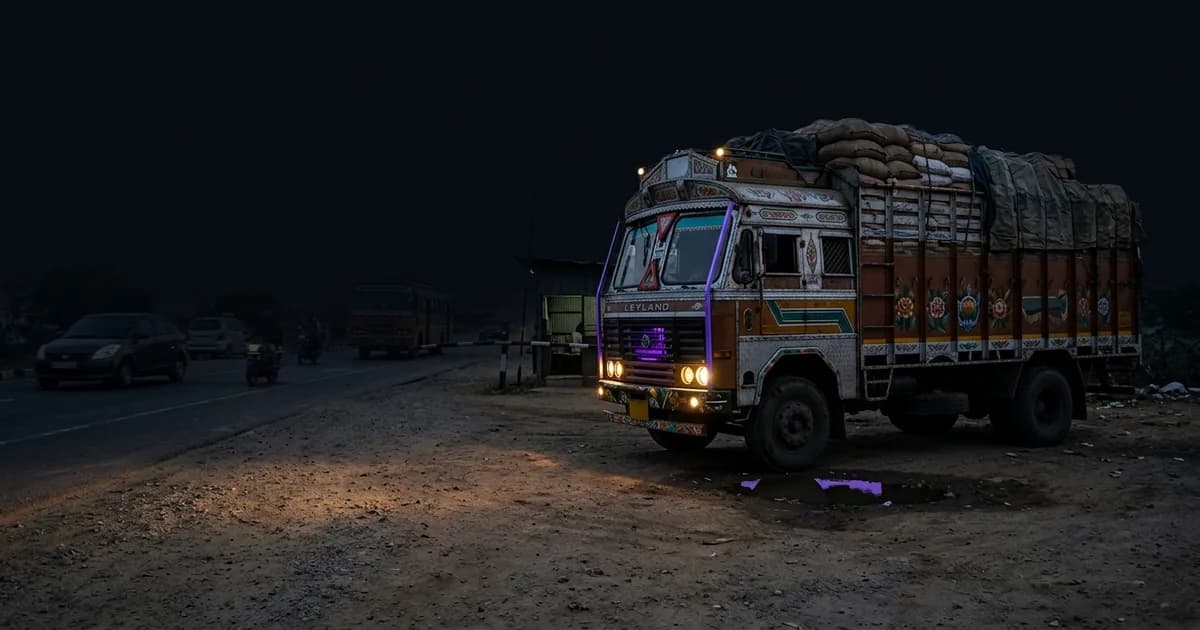
Imagine your truck is on a critical run from Delhi to Mumbai. The driver stops at a highway dhaba, gets delayed in traffic, and gets pulled over at a checkpost in Rajasthan. The officer checks the papers and points out the eWay Bill expired two hours ago. Now your truck is being taken to a yard. Most fleet owners think the fine is the main problem. They are wrong.
First, let's cover the official rules. eWay Bill is an electronic document needed to move goods worth more than ₹50,000 in India. It proves that the goods are compliant with tax laws. If this document expires during the trip, GST officers can stop the vehicle and issue a penalty. The exact fine can be large and is based on the tax value of the goods being carried. The complete rules for this are set out on the official eWay Bill portal.
This fine is a known cost. You pay it, get a receipt, and expect to move on. But the payment is just the start of a much bigger problem. The true financial damage happens while your truck is sitting idle, unable to earn you money. This is the real penalty for an expired eWay Bill.
Why Detention Costs Far More Than the Fine
A fine is a one-time payment. Vehicle detention is a continuous financial drain that hurts your business every single day the truck is parked. Detention is the act of authorities holding your truck and goods at a checkpoint or yard until the compliance issue is resolved. This process can take days, and the costs add up quickly.
Here are the real costs of a detained truck:
- Lost Daily Revenue. A truck that is not moving is not earning. For instance, if your vehicle earns ₹8,000 per day, a three-day detention is a direct ₹24,000 loss of income.
- Driver Costs. You still have to pay the driver's salary and daily allowance while he waits for the truck to be released. These costs continue even when no work is being done.
- Client Penalties. You promised your client a delivery date. Because of the delay, you have now missed it. This can lead to late-delivery penalties and, more importantly, a loss of trust. That client may not hire you for their next shipment.
- Missed Opportunities. That truck was likely scheduled for another trip after this one. That chance is now gone. Another transport company has taken the load you were supposed to pick up.
These mounting costs are why a simple compliance slip can cripple a small transport business. The rules from the Ministry of Road Transport and Highways are strict, and the indirect results of breaking them are severe.
Comparing the Official Fine vs. Real Detention Costs
To understand the full picture, it helps to see the costs side-by-side. The official penalty is a straightforward number. The costs of detention are complex and have a ripple effect across your entire operation. Opportunity cost is the lost chance to earn money from other trips because your truck was tied up.
Our methodology for this analysis involved checking the rules on the eChallan system and studying the real-world costs reported by fleet owners in over 100 detention cases.
| Cost Factor | Official Fine | Detention Costs |
|---|---|---|
| Direct Cost | One-time payment. | Daily and growing. |
| Time Impact | Paid in hours. | Lasts for days. |
| Business Impact | Affects one trip. | Hurts future business. |
| Hidden Fees | None. | Can be many. |
How Manual Tracking Leads to Costly Errors
Why do eWay Bills expire so often? The reason is that many transport companies still rely on manual systems. They use Excel sheets, WhatsApp messages, and phone calls to track dozens of vehicles at once. This is a recipe for failure.
A transport manager cannot watch every truck all the time. Human error is a mistake made by a person, not a system. For example, a manager gets busy with another urgent problem and forgets to check the expiry time for a specific truck. Or a driver gets stuck in a long FASTag queue or has a tyre burst, causing an unexpected multi-hour delay. A simple issue is all it takes for a valid eWay Bill to expire.
Relying on people to remember every single expiry date is not a system; it is a gamble. Sooner or later, something will be missed. Using basic GPS tracking helps you see where a truck is, but it does not warn you about compliance deadlines. You need a smarter system to avoid the penalty for an expired eWay Bill.
The Solution: Automating eWay Bill Compliance
The best way to solve this problem is to remove human error. Modern fleet management software can automate eWay Bill tracking and make expiry almost impossible. It connects all the dots: the truck's location, the trip details, and the eWay Bill's validity period.
Here is how a proper system prevents these problems:
- Proactive Alerts. The system tracks the trip's progress against the eWay Bill's expiry time. Long before it expires, it sends smart alerts to your dashboard, phone, and email. For instance, MoboSafe can even place an automated voice call to the driver in Hindi, warning him that the bill will expire soon.
- One-Click Extension. When you get an alert, you can extend the eWay Bill's validity with a single click from your phone or computer. This must be done before the bill expires, which is why early warnings are so important. Our automated eWay Bill management makes this process simple.
- Automatic Part-B Updates. As soon as a trip starts, the system can automatically update Part-B of the eWay Bill. It uses the vehicle number from your fleet's master data, which you can check using our RC check tool, and links it to the invoice. This data comes from the vehicle's GPS, which must meet the ARAI's AIS-140 standard.
AIS-140 is a standard mandated by the Indian government for vehicle tracking devices to ensure safety and security. By automating these steps, you close the compliance gaps that lead to fines and detention.
Choosing the Right eWay Bill Automation Partner
When looking for the best fleet management software in India, you need a partner who understands these ground-level challenges. A key feature to look for is hardware flexibility. Many providers force you to buy their GPS devices. MoboSafe is different. Our platform is hardware-agnostic, meaning it works with the GPS devices you already have.
It is also vital to know where your data is stored. Your operational data, such as routes, clients, and vehicle details from the Vahan portal, is sensitive. MoboSafe is an Indian company that builds for Indian transporters. Your data is stored securely in India.
The penalty for an expired eWay Bill is a tax on bad systems. It is a cost you pay for not having automated checks in place. Stop worrying about the fine and start thinking about the huge cost of detention. Automate your compliance to protect your revenue and keep your trucks on the road.
To learn more about how we can help your business, read about our mission on our about page or get in touch with our team through our contact page.
Reviewed by the MoboSafe editorial team.
Tags
Written by
MoboSafe Expert Team
Logistics Technology Specialist
Contributing writer at MoboSafe.