Key takeaways
- Updating Part-B of an eWay Bill is legally required before a new vehicle moves the goods.
- Manual updates during a breakdown often fail due to human error, leading to large penalties.
- Automation uses GPS and geofencing to update Part-B the moment a truck leaves a designated area.
- The correct vehicle number in Part-B is crucial for avoiding goods seizure and fines at RTO checkpoints.
- A smart system can even handle mid-trip vehicle changes by detecting unscheduled stops and updating the portal again.
Why Manual Part-B Updates Often Fail
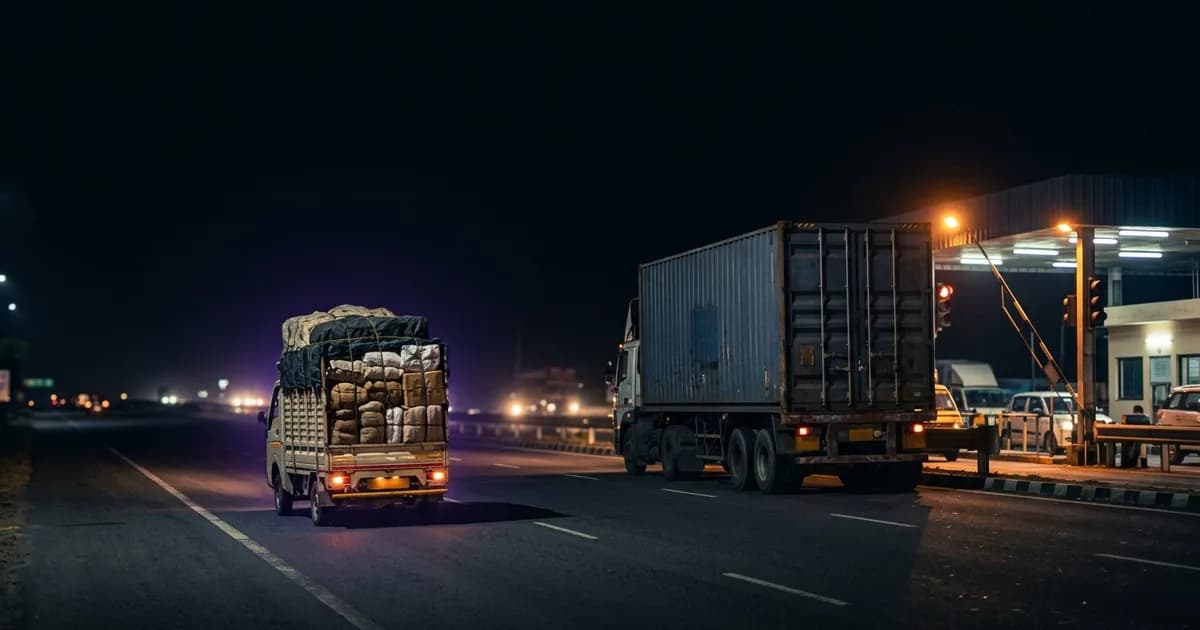
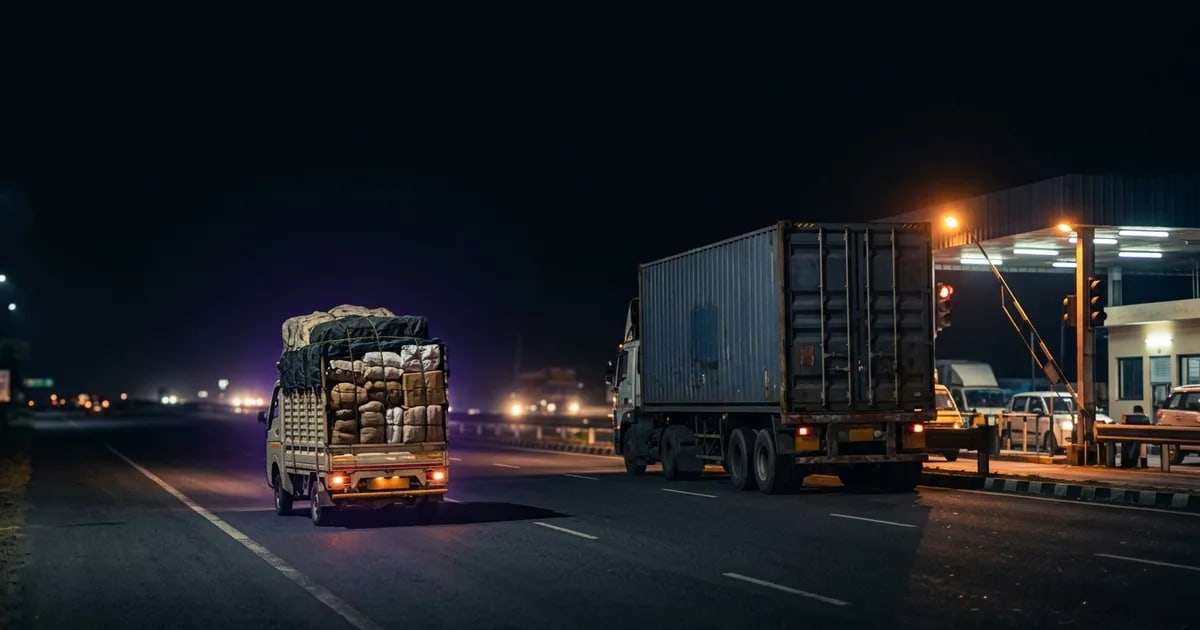
Imagine this common scene. A truck leaves your warehouse in Haryana, bound for a factory in Gujarat. Its eWay Bill is correct. But on the highway near Jaipur, it breaks down. You quickly arrange a new truck to take the goods. The cargo is moved, and the second truck continues the journey. But in the rush, nobody updates the vehicle number in Part-B of the eWay Bill.
An eWay Bill is an electronic document required for moving goods worth over a certain value. It is generated on the Goods and Services Tax (GST) portal. The rules for its use are set by the Central Board of Indirect Taxes and Customs (CBIC).
At the next state border, a Regional Transport Office (RTO) inspector checks the papers. The truck's number plate does not match the eWay Bill. Your truck is stopped. Your goods are seized. This single point of failure happens every day on Indian roads. The manual process is broken because it relies on a person to act perfectly during a crisis. For instance, a driver might be busy at a dhaba, or a manager might be handling three other emergencies. This is when mistakes happen.
The True Cost of a Mismatched eWay Bill
The penalty for an incorrect eWay Bill is steep. You could face a fine equal to 200% of the tax value. But the damage goes far beyond the challan. The real costs can cripple your transport business.
Part-B is the section of the eWay Bill that contains the vehicle's registration number. This part must be updated every time the vehicle carrying the goods changes. If it is wrong, the entire eWay Bill is considered invalid for that part of the trip.
Here are the hidden costs of a Part-B mismatch:
- Lost Revenue: A detained truck is a non-earning asset. It costs you money for every hour it sits idle.
- Damaged Reputation: A single seized shipment can destroy the trust you have built with a client. Late deliveries make you look unreliable.
- Increased Scrutiny: Repeated compliance issues can get your business flagged by GST authorities. This can lead to more frequent checks and audits.
- Staff Burnout: Your operations team should be managing logistics, not doing last-minute data entry on a slow government website. For example, asking them to log into the eChallan portal to check old fines while also updating a new bill adds huge stress.
How to Update Part-B of an eWay Bill Automatically
The only real fix is to remove human error. Modern fleet software automates the entire process. It connects your vehicle's GPS data directly to the eWay Bill system.
The process starts with geofencing. Geofencing is creating a virtual boundary around a real-world location, like your warehouse gate. When a truck assigned to a specific eWay Bill crosses this boundary, the system acts. It automatically pulls the truck's number from its GPS device. Then it pushes this information to the GST Network portal to update Part-B. This happens instantly. No phone calls, no typos, and no forgotten tasks.
This is the core of MoboSafe's automated eWay Bill compliance solution. Our methodology for this guide involved a review of the official rules for updating vehicle details as stated on the eWay Bill portal. The system ensures the bill is not just created correctly but stays valid for the whole journey. This level of automation relies on accurate data from a certified AIS-140 GPS tracker, a standard set by the Automotive Research Association of India (ARAI).
Handling Breakdowns and Transshipments Mid-Route
A simple geofence at the start is not enough. What about the truck that broke down near Jaipur? A truly smart system handles these real-world problems.
Transshipment is the process of moving goods from one vehicle to another during a single journey. This is a common reason for updating Part-B. Our system detects long, unscheduled stops that might signal a breakdown. Roadside stops are dangerous and stressful, contributing to the high number of road traffic deaths in India reported by the World Health Organization.
When a breakdown happens, you simply assign a new truck to the trip in the MoboSafe dashboard. The system then takes over. The moment the new truck starts moving with the goods, its details are automatically pushed to the eWay Bill portal. Compliance is maintained, even in chaos. For instance, if a truck gets stuck in a flooded section during the monsoon, you can dispatch a new vehicle and update the bill without a single phone call to a stressed-out driver. You can always cross-check vehicle details using an online RC check tool to ensure accuracy before dispatch.
| Feature | Manual Part-B Update | Automated Part-B Update |
|---|---|---|
| Trigger | Manual phone call. | GPS geofence cross. |
| Accuracy | Prone to human error. | Pulls data from GPS. |
| Speed | Can take hours. | Happens in seconds. |
| Breakdowns | High-stress and slow. | Handled by the system. |
Choosing the Right Automation for Indian Roads
Switching to an automated system should not mean replacing all your hardware. A good platform is hardware-agnostic. This means it can work with your existing GPS devices. This saves you a huge upfront cost. MoboSafe's software, for example, integrates with over 200 different GPS models.
It is also important to choose a system built for India. Our roads, our checkpoints, and our regulations are unique. Your data should also be secure and stored within India. This is known as data sovereignty. Before committing to any new system, you should check that the vehicle registration details are correct on the central government's Vahan Sewa portal. This ensures the data your automation relies on is accurate from the start.
You can stop paying fines and end the daily stress of manual compliance. The question is not whether you can afford to automate. It is how much longer you can afford not to. The next time a truck has a problem, your manager should focus on the solution, not on a government website. Let technology handle the paperwork while you focus on your business.
Common Questions About Part-B Updates
- Can I update Part-B after the eWay Bill expires?
No. You cannot change Part-B once the bill's validity period has ended. All updates must happen while the eWay Bill is still active. - How many times can Part-B be updated?
You can update Part-B multiple times, as long as the eWay Bill is valid. This is necessary for trips that involve several vehicle changes. - What details are needed to update Part-B?
You need the new vehicle number, the place where the change happened, the reason (such as 'Breakdown' or 'Transshipment'), and sometimes a transporter document number.
To learn more about how our technology helps transport businesses in India, you can read about us here or get in touch with our team. We can help you stop worrying about compliance and start growing your operations.
Reviewed by the MoboSafe editorial team.
Tags
Written by
MoboSafe Expert Team
Logistics Technology Specialist
Contributing writer at MoboSafe.