Key takeaways
- Insurance premiums are often based on general statistics, not your fleet's actual safety record.
- Video evidence from dashcams provides undeniable proof of safe driving and driver innocence.
- This proof allows you to negotiate lower premiums with your insurer by showing them your real risk level.
- Data on driver behaviour, such as harsh braking, can demonstrate proactive risk management.
- Using an integrated system helps you build a strong, data-backed case for every renewal.
Why Your Insurance Premium is a Blind Bet
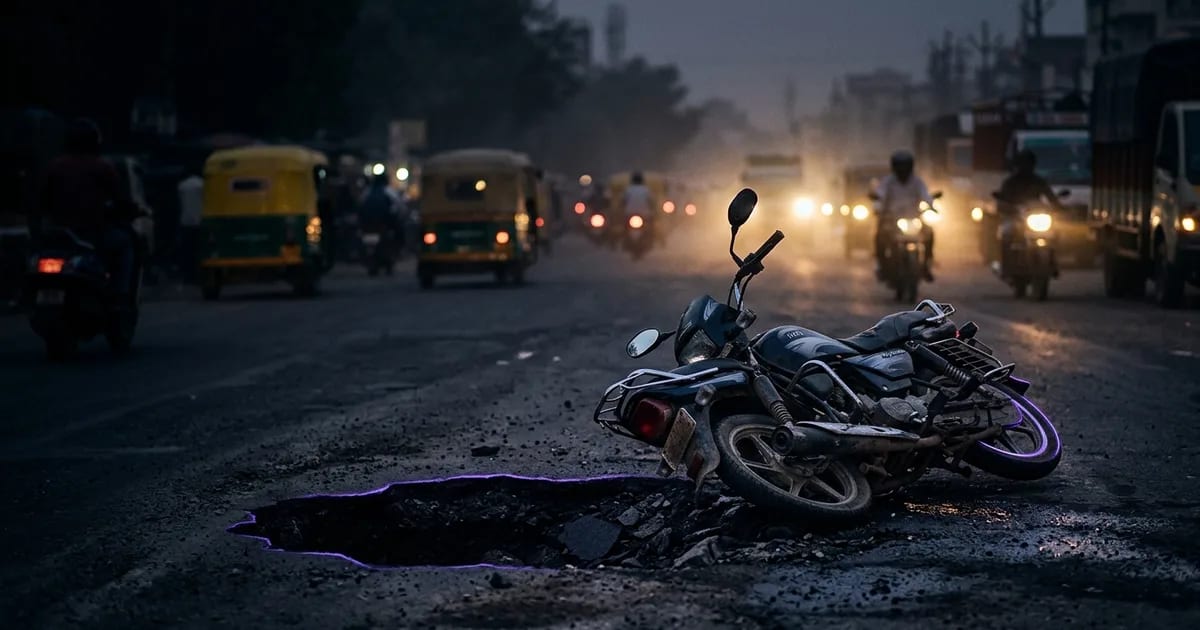
Every year, you face the same difficult talk with your insurance provider. It is a one-sided chat. Someone who has never been in your truck’s cabin tells you how much risk your fleet represents. They show you generic industry charts. They point to national accident statistics. Then they offer a renewal quote that is far too high.
They are placing a blind bet against you. They assume your drivers are reckless and your trucks are in poor shape. Why? Because they have no hard data or visual proof. An assumption is all they have. You can talk about your driver training and safety rules. It is just noise to them. Without leverage, you pay what they ask.
Insurance Premium is the amount of money a business pays for an insurance policy. Insurers often set this price based on broad data. For example, India has a high number of global road traffic deaths. Insurers use this fact to justify high premiums for all commercial vehicles according to the World Health Organization. They do not look at your fleet's specific safety record.
How Insurers Assess Risk the Old Way
The current system for assessing risk is outdated. An insurer's model is built on paperwork, past claims, and vehicle type. It is a blunt tool in a world that needs precision. This model does not know you choose the safest routes. It does not know you just bought new tyres for the whole fleet. It does not see the difference between a driver with a clean 10-year record and a new hire.
Risk Profile is an insurer's assessment of how likely you are to make a claim. This profile is often built on incomplete information. For instance, a minor scrape at a crowded loading dock in Bhiwandi is treated the same as a major highway incident. The context is lost. The truth does not matter. Only their old spreadsheet does. This general approach to transport policy misses key details on the ground as noted by the Ministry of Road Transport and Highways.
| Risk Factor | Old Method (Insurer's Guess) | New Method (Your Proof) |
|---|---|---|
| Driver Skill | Based on age and licence. | Real-time behaviour scores. |
| Accident Fault | Assumed based on claim. | Proven with video evidence. |
| Vehicle Condition | Based on age and class. | Upkeep and inspection records. |
| Route Safety | Not considered at all. | GPS data showing safe routes. |
Video Proof: Your Ace for a Better Deal
Now, imagine a different conversation. You walk into the negotiation and put a tablet on the table. You press play. This changes everything. You are no longer telling them your fleet is safe. You are showing them. Video evidence from a modern AI dashcam system flips the script.
Video Telematics is a technology that combines vehicle GPS tracking data with video footage from dashcams. It is your ace in the hole. That biker who cut across three lanes and blamed your driver? The video proves your driver braked hard and avoided a bad crash. That false claim from another person? The footage shows your truck was not even there. False claims disappear. Ambiguity ends.
Advanced safety systems are becoming standard in many regions to reduce accidents as seen in European regulations. For example, if a car suddenly stops in a FASTag lane, the video proves your driver kept a safe distance. This technology provides the full picture. It proves you are actively managing and reducing risk every single day.
Building Your Case with Hard Data
Having proof makes you a partner in the insurance process, not just a customer. You can build a strong case for a lower premium. Stop going into renewal talks empty-handed. Prepare a dossier of your fleet's safety performance. This file should contain clear, verifiable data that an insurer cannot ignore.
Driver Scorecard is a report that grades drivers on safety metrics like speeding, harsh braking, and acceleration. These scores show your commitment to safety. You can present this data to your insurer to prove your low-risk profile. For instance, you could show a report on your drivers having no pending fines by checking official records from the eChallan system.
Here is what to include in your safety dossier:
- A sharp drop in harsh braking events over the last six months.
- Driver safety scores that are getting better over time.
- Video clips of incidents where your driver's skill prevented an accident.
- Proof of zero fraudulent claims paid because video cleared your driver.
This detailed information gives you a solid base for your arguments. When you have the best AI dashcam, your evidence is even stronger. It makes your case impossible to dispute.
The MoboSafe Advantage for Indian Fleets
Collecting data is one thing. Making it work for you is another. MoboSafe built its platform for the tough reality of Indian logistics. Our methodology involved reviewing the technical specifications for vehicle tracking devices mandated by the Automotive Research Association of India known as ARAI. This ensures our solutions meet the highest standards.
AIS-140 is a standard mandated by the Indian government for vehicle tracking systems to ensure safety and security. A certified GPS tracking device provides accurate, geolocated data that cannot be disputed. This forms the bedrock of a reliable safety system.
Here’s how we help you:
- Your Data Stays in India. We are an Indian company. We guarantee your fleet's critical information, from routes to driver videos, is stored on servers in India. Your data's security is our promise.
- Integrates With Your Old Tech. Many fleets have a mix of old GPS devices. We do not ask you to rip them out. Our system works with the devices you already own. We add our AI and video intelligence on top.
- Alerts That Take Action. What if our AI spots a tired driver at 2 AM on the Agra-Lucknow Expressway? Other systems just send a notification. We do more. Our AI Voice Calling Agent calls the driver and the fleet manager in their own language. This is a real-time intervention. It can prevent a disaster.
Frequently Asked Questions
Will my drivers accept a camera in the cabin?
Some drivers may resist at first. However, it is a tool for their protection. It can prove their innocence in an accident and stop false accusations. Most drivers see the benefit. It protects good drivers and helps coach others.
How much can I realistically save on my insurance?
Savings vary by insurer and fleet history. Fleets that use video to show a steady drop in risk events have a much stronger case. They are better positioned to negotiate lower premiums than fleets without such proof.
I already have GPS trackers. Do I need to replace them?
No. This is a key advantage of our platform. MoboSafe's system is hardware-agnostic. It can integrate with your existing AIS-140 compliant GPS devices. This saves you the big cost and hassle of a full hardware change.
Is my fleet's video data secure?
Yes. We are an Indian company, and your data sovereignty is guaranteed. All your data is encrypted. It is stored on secure servers located within India. This means it is protected under Indian law and never leaves the country.
The days of just accepting the premium an insurance company offers are over. You have the power to change the game. Video telematics is not just an expense. It is an investment that pays for itself. First, it prevents accidents. Then, it helps cut your insurance costs. Stop betting blind. Start negotiating with a full deck of evidence.
Learn more about our mission on our about page or contact us to see how we can help your fleet. Reviewed by the MoboSafe editorial team.
Tags
Written by
MoboSafe Expert Team
Logistics Technology Specialist
Contributing writer at MoboSafe.