Key takeaways
- Standard dashcam footage without metadata can be challenged in Indian courts.
- GPS-stamped video with speed, time, and location data is legally powerful evidence.
- AI dashcams automatically save and upload critical incident footage to a secure cloud, preventing data loss.
- Storing your fleet's data on Indian servers ensures it meets local legal standards for admissibility.
- Proving fault quickly avoids long legal battles, insurance claim delays, and unnecessary payouts.
To prove fault in an accident with a dashcam, the video must be submitted as electronic evidence under the Indian Evidence Act, 1872. The footage is considered a primary document if the original file from the memory card or cloud is presented. More commonly, a copy is submitted, which requires a certificate under Section 65B of the Act to verify its authenticity. This certificate confirms the computer or device that produced the copy was functioning properly and the data has not been altered. For the evidence to be undeniable, it must contain immutable metadata. This includes a clear timestamp, GPS coordinates showing the exact location, and vehicle speed data. For instance, this data proves you were driving under the speed limit when another vehicle cut you off. Footage automatically uploaded to a secure Indian cloud server from a 4G dashcam provides the strongest chain of custody, making it very difficult for the opposing party to challenge in court.
The Roadside Courtroom: Why 'He Said, She Said' Fails
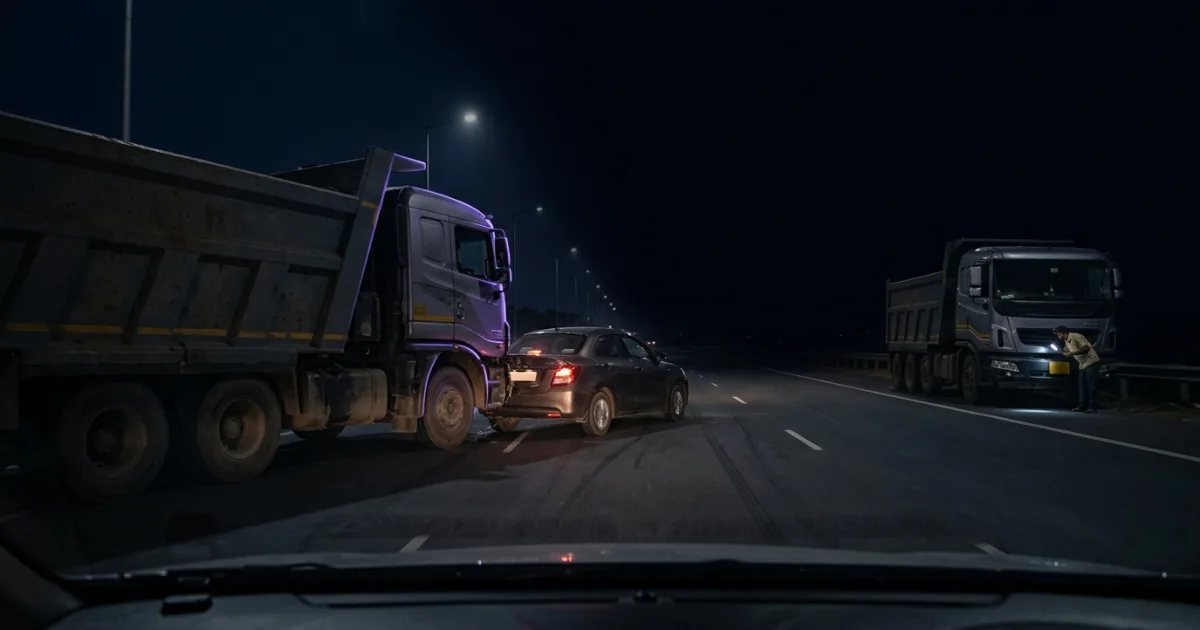
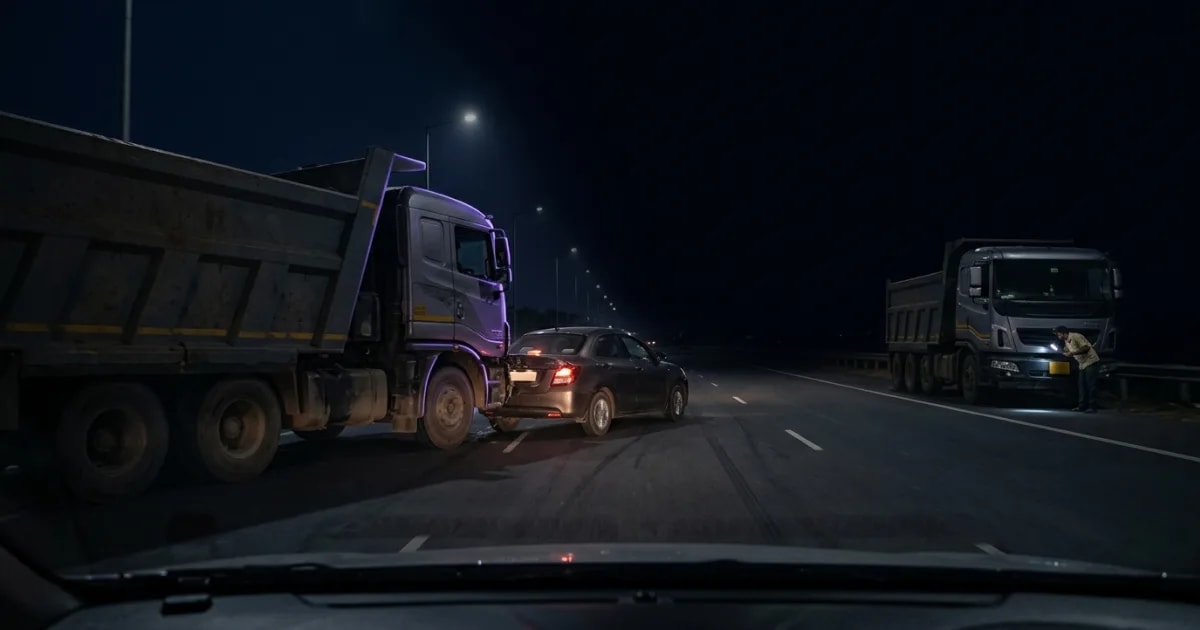
Picture this. Your truck is on the Delhi to Mumbai route, fully loaded. A car cuts in front, brakes hard. Your driver reacts, but there's a collision. Instantly, it's chaos. The other driver is screaming. A crowd gathers. By the time the police arrive, the story is already twisted against your driver. This happens every single day.
Without hard proof, you are at the mercy of a flawed system. Police reports can be vague. Eyewitnesses remember things differently or just want to avoid trouble. Eyewitness Testimony is the verbal account of an event given by someone who was present, which is often unreliable under stress. You're left fighting a battle of words, which often leads to heavy challans, a mark on your driver's record, and a nightmare insurance claim process. Your business pays the price for an accident you didn't cause.
How to Prove Fault in an Accident with a Dashcam: The Legal Checklist
Having a dashcam is the first step. Using its footage to win a case is another. You can't just show a video on your phone to a judge. There's a process. Road traffic injuries are a massive problem, causing huge economic losses to victims and their families as noted by the WHO road traffic injuries fact sheet. Protecting your fleet is not optional.
Follow these steps to make your footage legally count:
- Secure the Evidence Immediately. The moment an incident occurs, the footage needs to be protected. The best AI Dashcams do this automatically, locking the file and uploading it to the cloud via 4G. This prevents it from being recorded over or tampered with.
- Maintain a Clean Chain of Custody. Do not download the file, edit it, or share it on WhatsApp. The original, unaltered file from the cloud is your strongest asset. Chain of Custody is the documented trail of evidence, showing it has been securely handled from collection to presentation in court.
- Provide a Section 65B Certificate. When you submit a copy of the video, it must be accompanied by this certificate. Section 65B Certificate is a legal document under the Indian Evidence Act that authenticates electronic records, making them admissible in court.
- Highlight the Metadata. The video itself is only half the story. Your report should point to the GPS coordinates, the timestamp, and the recorded speed embedded in the footage. This data provides context that no eyewitness can dispute.
Not All Footage is Created Equal: SD Card vs. Cloud Evidence
Many fleet owners think a cheap dashcam with an SD card is enough. It's a dangerous mistake. An SD card is a massive point of failure right when you need it most. It can be damaged in the impact, stolen from the vehicle at the scene, or intentionally erased by a guilty driver.
| Feature | SD Card Dashcam | 4G Cloud Dashcam |
|---|---|---|
| Data Security | Easily stolen or damaged. | Secure cloud storage. |
| Accessibility | Requires physical access. | Instant remote access. |
| Tamper-Proofing | Files can be edited. | Immutable log files. |
| Legal Strength | Weaker evidence chain. | Strong chain of custody. |
For example, if your truck is involved in a hit-and-run at night, the driver may not even be able to recover the SD card. With a 4G cloud camera from our list of the best AI dashcams in India, the footage of the event is already safe on a server before your driver has even stepped out of the cabin.
The MoboSafe Advantage: GPS Stamping and Data Sovereignty
This is where we change the game. Our platform doesn't just record video. It creates court-admissible evidence. Every second of footage is stamped with precise AIS-140 GPS data. We show where your vehicle was, down to the meter. We show how fast it was going. This is not just a video; it's a digital reconstruction of the event.
More importantly, we guarantee data sovereignty. Data Sovereignty is the principle that digital data is subject to the laws of the country in which it is located. Your fleet's data is stored on servers in India, managed by an Indian company. When you present evidence in an Indian court, there are no questions about international data laws or foreign server access. It's clean, compliant, and built for Indian legal realities.
Our methodology for this guide involved reviewing the Indian Evidence Act, 1872 and current circulars on the Ministry of Road Transport and Highways portal to assess the legal weight of digital evidence. MoboSafe's AI Control Tower is also hardware-agnostic. For instance, if you already have GPS devices from another vendor, you don't have to throw them away. Our software can often integrate with them, giving you a single, powerful dashboard to manage your entire fleet.
Beyond the Crash: How AI Prevents Accidents
The best way to win an accident claim is to avoid the accident altogether. Proving fault is good. Preventing the crash is better. This is where our AI moves from being a witness to a co-pilot.
Our systems use advanced Driver State Monitoring (DSM). For instance, the camera detects a driver yawning, looking at their phone, or not wearing a seatbelt. It's not about spying. It's about safety. When a critical event is detected, such as signs of fatigue on a long night haul, our AI Voice Calling Agent can proactively call the driver or manager. It’s a real-time intervention that can save lives and cargo. It’s about managing risk before it becomes a liability.
Frequently Asked Questions
Is dashcam footage admissible in Indian courts?
Yes, dashcam footage is admissible as electronic evidence in Indian courts. However, to ensure its validity, it should be presented with a certificate under Section 65B of the Indian Evidence Act, 1872, to prove its authenticity and that it has not been tampered with.
Can a dashcam reduce my insurance premium?
While some insurers may offer a small discount, the real financial benefit is not in the premium. A dashcam drastically speeds up the claims process and provides undeniable proof to fight false claims, saving you from paying for accidents your fleet did not cause and protecting your No Claim Bonus.
What happens if the SD card is destroyed in the crash?
This is a major risk with basic dashcams. If the SD card is destroyed, the evidence is lost forever. This is why 4G-enabled AI dashcams that automatically upload incident footage to a secure cloud server are essential for commercial fleets.
Does MoboSafe dashcam data stay in India?
Absolutely. We guarantee 100% data sovereignty. All your fleet data, including video footage and telematics, is securely stored on servers located within India, ensuring compliance with Indian laws and regulations.
A dashcam is no longer a good-to-have gadget. It's a core part of your legal and financial defense strategy. Don't wait for an accident to show you the gaps in your defense. Learn more about our approach on our about page or contact us to secure your fleet today. Reviewed by the MoboSafe editorial team.
Tags
Written by
MoboSafe Expert Team
Logistics Technology Specialist
Contributing writer at MoboSafe.