Key takeaways
- Generating an eWay Bill requires filling Part A (consignment details) and Part B (vehicle details) on the official portal.
- The transporter is responsible for updating Part B every time the vehicle changes for a consignment.
- An invalid or expired eWay Bill can lead to a penalty of 200% of the tax value or the full value of the goods.
- Manual eWay Bill generation is slow and full of errors, leading to costly challans and delays.
- Software automation is the only reliable way to manage eWay Bills for multi-vehicle fleets, ensuring compliance and saving money.
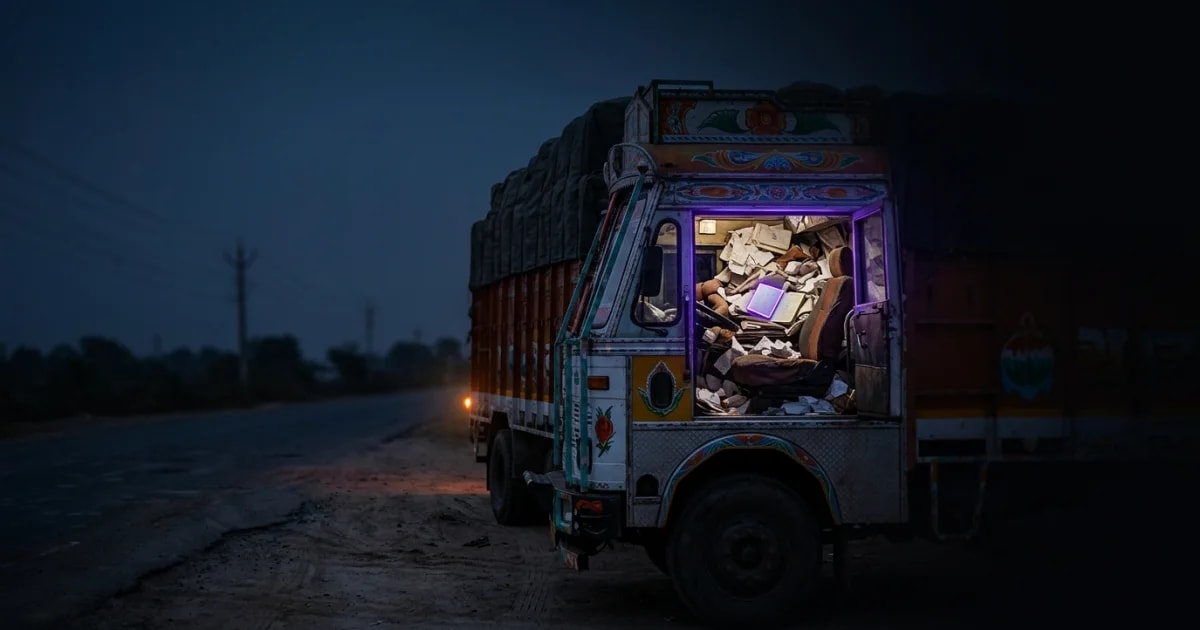
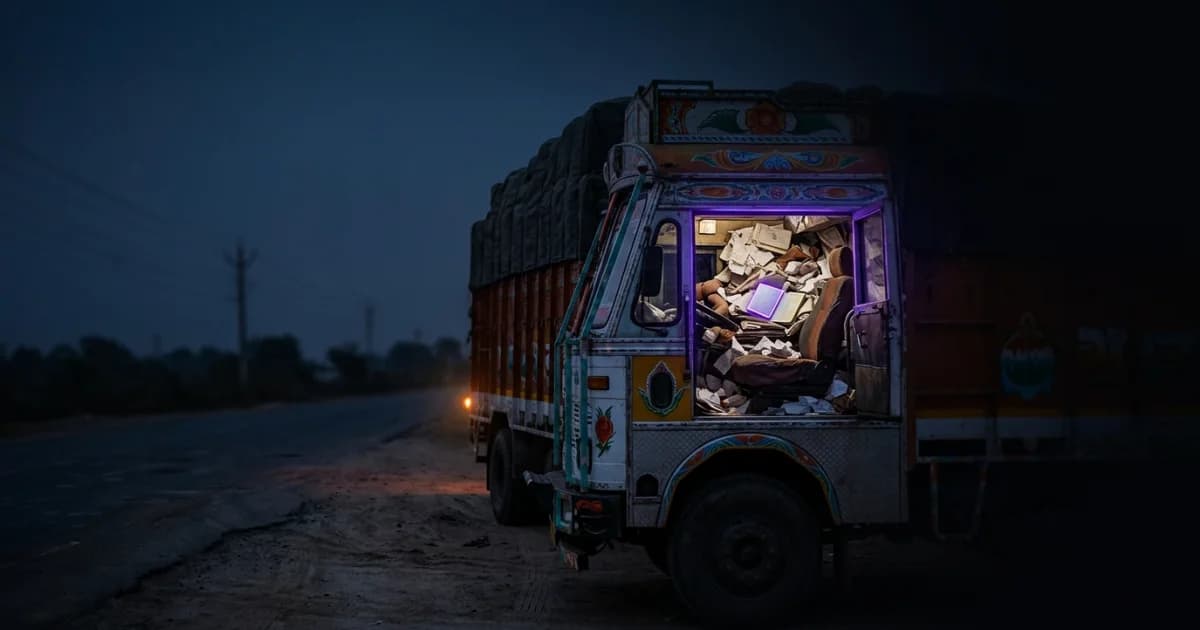
The truck is loaded. The driver is ready. But the wheels don’t move until the eWay Bill is generated. One small mistake, one typo in the vehicle number, and your truck is seized. The RTO babu is not your friend. He is looking for reasons to issue a heavy challan. We see this every day. A simple trip from Delhi to Mumbai turns into a nightmare of fines and impounded goods because of a clerical error made at 2 AM.
This isn't just about paperwork. It's about your money. Your reputation. Your entire business is on the line with every single consignment. The official portal feels like a trap designed to make you fail. It’s slow, confusing, and unforgiving. But there is a better way.
To generate an eWay Bill for a transporter, you must use Form GST EWB-01 on the eWay Bill portal. The process involves two parts. Part A contains consignment details like GSTIN of recipient, place of delivery, and HSN code. This is usually filled by the supplier. The transporter's main job is to fill or update Part B with the vehicle number before the movement of goods begins. If the goods are moved less than 50 km within the same state, updating Part B is not mandatory. The validity of the eWay Bill depends on distance. For instance, it's valid for one day for up to 200 km, with an extra day for every 200 km thereafter. As per the rules on the official eWay Bill portal, failing to have a valid eWay Bill during transit can result in a penalty equal to 200% of the tax payable. This makes correct generation absolutely critical for transporters.
What Exactly is an eWay Bill and Why is it a Big Deal?
An eWay Bill is not just another piece of paper. It's a digital permit. It's required for moving goods worth more than ₹50,000 across India. Think of it as a digital passport for your cargo. Without it, your truck is effectively moving illegal goods in the eyes of the tax authorities. The system was designed to track goods movement and curb tax evasion. A noble goal, but a daily headache for us in the transport business.
The penalties are brutal. They are not small fines. We are talking about lakhs of rupees. For example, a consignment with a ₹5 lakh tax liability could face a ₹10 lakh penalty for a simple eWay Bill error. This is not a risk. It's a certainty if you don't get it right every single time. eWay Bill is an Electronic Way Bill that transporters must carry when moving goods from one place to another if the value exceeds a set limit.
The Two Halves of the Problem: Part A and Part B
The eWay Bill is split into two sections. This division of labor is where most of the confusion starts.
Part A: The Consignment Story
This section holds all the details about the goods. It includes the GSTIN of the supplier and recipient, delivery pin code, invoice number, and value of goods. Usually, the person dispatching the goods (the consignor) fills this part. Once Part A is filled, an eWay Bill Number (EBN) is generated. Part A is the section of the eWay Bill containing details of the consignment and is typically filled by the supplier of the goods.
Part B: The Transporter's Responsibility
This is our domain. Part B contains the vehicle details. You must enter the truck number and the Transporter ID. Without Part B, the eWay Bill is not valid for the movement of goods. If the vehicle breaks down or you have to trans-ship the goods, you must update Part B with the new vehicle details immediately. This is a huge pain point. For instance, if a truck from Surat breaks down near Jaipur on its way to Delhi, the transporter must immediately log in and update Part B before the new truck can move.
The Manual Method: How to Generate an eWay Bill for Transporters
If you must do it manually, here is the painful process. Our methodology reviewed the steps on the official GST portal to outline this common workflow.
- Login: Go to the eWay Bill portal and log in with your credentials.
- Navigate: Click on 'e-Waybill' and then 'Generate New'.
- Fill Part A: If the consignor hasn't filled it, you will need all the invoice details to complete this section.
- Enter Transporter ID: Ensure your 15-digit GSTIN-based Transporter ID is correctly entered.
- Fill Part B: This is the crucial step. Enter the correct vehicle number, check it twice, and submit.
- Generate: The system will generate the eWay Bill in Form EWB-01 with a unique 12-digit number.
Part B is the section of the eWay Bill containing transport details like the vehicle number, which must be filled by the transporter. This process is okay for one truck. It's a disaster for a fleet of fifty.
Common Blunders That Cost You a Fortune
Manual entry is a minefield. One wrong digit and your driver is stuck on a highway, arguing with an officer. Here are the mistakes we see costing transporters lakhs every month.
| Manual Process Error | Automated System Advantage |
|---|---|
| Typo in vehicle number. | Pulls from a master list. |
| Expired eWay Bill validity. | Sends alerts before expiry. |
| Forgot to update Part B. | Automates Part B updates. |
| Incorrect HSN code entry. | Validates codes automatically. |
A simple typo, for example, changing DL01AB1234 to DL01AB1243, makes the eWay Bill completely invalid. Automation with the best eWay Bill software prevents these basic, yet costly, human errors.
The Only Sane Solution: Automation and Integration
You cannot scale a transport business on manual data entry. It's impossible. The only way to survive and thrive is to automate. This is where a modern Freight OS like MoboSafe changes the game. Our platform for Automated eWay Bills integrates directly with your existing systems.
You don't have to throw away your old GPS devices. Our AI Control Tower is hardware-agnostic. It works with what you have. For instance, when a truck's location data from its AIS-140 GPS shows it has deviated or stopped for too long, the system can flag potential issues. Our system can then cross-reference this with eWay Bill validity to prevent expiry during transit.
What's truly revolutionary are our AI Voice Calling Agents. AI Voice Calling Agents are automated systems that can proactively call drivers or fleet managers with important alerts. For example, if an eWay Bill is about to expire in three hours and the truck is still far from its destination, our AI agent will call the manager. No more relying on a busy operations manager staring at a screen. You get a direct, automated voice call. Problem solved before it becomes a penalty.
Your Data, Your Fort: The Importance of Data Sovereignty
Where is your operational data stored? Is it on a server in some other country? For many logistics tech providers, the answer is yes. This is a huge risk. Your data is your business. It includes client lists, routes, and pricing. It needs to be protected.
MoboSafe guarantees Data Sovereignty. Our software is built in India, for India. Your data stays in India. Period. Data Sovereignty is the principle that data is subject to the laws and governance structures within the nation it is collected. This is not a small promise. It's a core part of our commitment to Indian transporters.
Frequently Asked Questions
What is a Transporter ID?
A Transporter ID, or TRANSIN, is a unique 15-digit identification number. It's for an unregistered transporter enrolled on the eWay Bill portal. If you are a registered transporter with a GSTIN, your GSTIN acts as your Transporter ID.
How do I update Part B of the eWay Bill?
You can update Part B by logging into the eWay Bill portal, selecting the 'Update Part B/Vehicle' option, entering the EBN of the relevant bill, and providing the new vehicle details. This must be done before the new vehicle starts moving the goods.
Can I extend the validity of an eWay Bill?
Yes, you can extend the validity of an eWay Bill. This can be done eight hours before and up to eight hours after its expiry. You must provide the reason for the extension, such as a vehicle breakdown or trans-shipment delay.
What happens if I don't generate an eWay Bill?
Moving goods worth over ₹50,000 without a valid eWay Bill is a serious offense. Authorities can detain or seize the vehicle and the goods. You will face a penalty that could be as high as 200% of the tax value, as per rules cited by the Central Board of Indirect Taxes and Customs.
Stop letting paperwork dictate your profits. The tools to fix this mess are here. You can learn more about our company here or contact us to see how we can help your fleet become more compliant and profitable. Reviewed by the MoboSafe editorial team.
Tags
Written by
MoboSafe Expert Team
Logistics Technology Specialist
Contributing writer at MoboSafe.